IoT & Connected Health
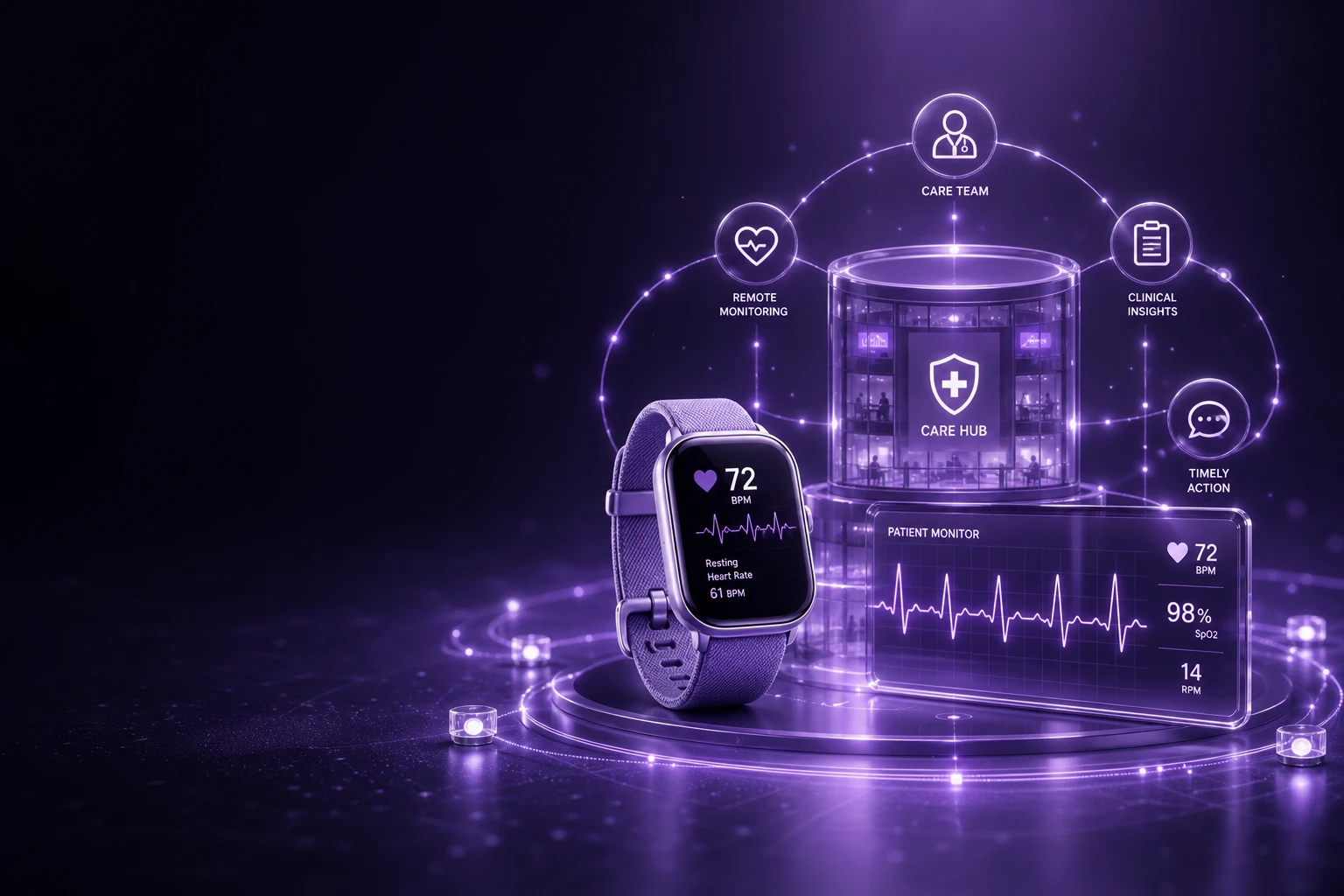
Patient data that stays in the device is not improving care. Connected health software changes that.
Why work with 247 Labs
247 Labs has built secure, HIPAA-compliant platforms for healthcare organizations, insurance providers, and regulated clinical environments for more than a decade.
Delivery reliability, healthcare data expertise, and a genuine focus on clinical outcome impact have earned long-term partnerships with health organizations.
Our team has delivered custom clinical platforms, health data pipelines, and connected health integrations across healthcare, insurance, and enterprise operations.
Challenge Mapping
Core connected health IoT challenges mapped to practical software solutions.
Healthcare IoT programs stall at three points: device data that cannot reach clinical systems in a usable format, alert fatigue from monitoring systems that flag too many non-actionable events, and security architectures that cannot protect patient data across a distributed device network.
Your medical devices and wearables are generating data that is not reaching the clinical workflows where it could change care decisions.
We build the IoT data pipelines, HL7 FHIR normalization layers, and EHR integration APIs that take raw device readings from RPM monitors, wearables, and bedside equipment and deliver them as structured clinical data to the right care team member at the right time.
Often starts with a device landscape audit and data flow mapping session to identify integration priorities.Remote monitoring alert systems are generating so many notifications that care teams cannot distinguish critical signals from noise.
We build intelligent alert management systems that apply clinical thresholds, patient-specific baselines, and ML-based anomaly detection to device data streams, surfacing only the alerts that require care team action and suppressing the low-acuity notifications that create alert fatigue.
Best suited for remote patient monitoring programs experiencing high alert volumes and low clinical response rates.Connected medical devices on your network are creating cybersecurity exposure that your current security architecture was not designed for.
We build IoT security architectures for healthcare device networks: device authentication, encrypted transmission, network segmentation, device inventory management, and anomaly detection that protect patient data and prevent unauthorized access to connected medical equipment.
Critical for hospitals and health systems with growing medical device estates and increasing regulatory scrutiny of device security.Services
IoT and connected health software services for healthcare organizations building the data infrastructure, monitoring platforms, and device integration layers that turn raw device data into clinical action.
Each engagement is scoped around the specific device ecosystem, clinical workflow, and HIPAA data handling requirements of your connected health program.
Connected Health Architecture Design
Map the device landscape, data flow requirements, EHR integration needs, and security architecture before any development begins, producing a connected health roadmap aligned to your clinical and operational priorities.
Remote Patient Monitoring Platforms
Build RPM platforms that collect, normalize, and display patient-generated health data from wearables, home monitoring devices, and implantables, with alert management and care team notification workflows.
Medical Device Data Integration
Build the data pipelines, HL7 FHIR normalization engines, and EHR integration APIs that deliver device readings as structured clinical data to Epic, Cerner, Meditech, and other clinical systems.
Smart Hospital Asset Management
Build IoT-powered asset tracking, utilization monitoring, and maintenance scheduling systems for hospital equipment, beds, and supplies.
Connected Health Mobile Apps
Build patient-facing mobile applications that connect to wearables and monitoring devices, display personal health trends, and enable secure communication with the care team.
Healthcare IoT Security Architecture
Design and implement device authentication, network segmentation, encrypted data transmission, and anomaly detection for healthcare device networks.
Case Studies
Connected health and digital care platform success stories.
GuardMe: mobile-connected health access platform that gave students real-time visibility into their health coverage and care options
42% increase in mobile engagement after connecting patient-facing health data to a mobile-first interface
247 Labs built the connected data layer and mobile patient interface for GuardMe’s student health platform, enabling students to access their real-time health coverage status, locate providers, and track claims from any device, applying the same connected data architecture that underpins effective RPM and telehealth platforms.
Read case study →ImageSim: real-time clinical performance monitoring for medical professionals in a SickKids-associated simulation program
50% improvement in clinical completion rates after deploying real-time performance feedback connected to the simulation environment
247 Labs built the real-time clinical performance monitoring infrastructure for the ImageSim platform, capturing simulation data as medical professionals completed clinical scenarios and delivering immediate performance feedback through the same connected data architecture used in remote patient monitoring.
Read case study →
RPM platform: chronic disease monitoring that reduced 30-day readmission rates by 28% for a post-discharge cardiac program
28% reduction in 30-day readmission rate for cardiac patients enrolled in the post-discharge remote monitoring program
247 Labs built a remote patient monitoring platform for a post-discharge cardiac program, integrating wrist-worn cardiac monitors, blood pressure cuffs, and weight scales into a unified dashboard with intelligent alert management that gave care coordinators early warning of deterioration before it required emergency intervention.
Start Your Project →Capabilities
Delivery strengths for healthcare organizations building connected health infrastructure on HIPAA compliance, clinical workflow integration, and real-world device ecosystem requirements.
247 Labs combines IoT platform development, HL7 FHIR clinical data integration, mobile development, and healthcare security architecture to build connected health systems that work in actual clinical and patient environments.
Connected health strategy and IoT architecture design
Define the device landscape, data flow, integration requirements, and clinical outcome metrics before any connected health development begins.
IoT platform development and EHR integration
Build the data pipelines, device connectivity, and clinical system integrations that turn device data into clinical action.
Intelligent monitoring and predictive health analytics
Apply ML to device data streams to reduce alert fatigue, predict deterioration, and surface clinically significant patterns.
HIPAA-compliant IoT and device data security
Build connected health systems with the PHI protection, device security, and access control that healthcare regulations and payers require.
Integrations and Ecosystem Fit
Connected health platforms built to integrate with the devices, clinical systems, and health data infrastructure your program depends on.
IoT data that cannot reach the EHR or care team workflow produces impressive monitoring dashboards and limited patient outcome improvement.
247 Labs built the connected data layer that gave our students real-time access to their health information from any device. The same architecture principles that power remote patient monitoring are what make a patient-facing health platform feel truly connected rather than just informational.
Martin-Pecaric, CEO, ImageSim-SickKids
Business Benefits
Why connected health and IoT infrastructure produces measurable clinical and operational outcomes that periodic in-person visits cannot match.
Remote monitoring, connected devices, and real-time health data change the fundamental economics of chronic disease management, post-acute care, and hospital asset operations.
Catch deterioration before it becomes an emergency
Continuous device monitoring with intelligent alert management gives care teams the early warning that periodic visits cannot provide for high-risk chronic disease patients.
Reduce unnecessary readmissions
Post-discharge remote monitoring with EHR-integrated alert workflows catches the early signs of post-acute deterioration before they require readmission.
Extend the reach of care team capacity
Remote monitoring programs allow one care coordinator to monitor more patients than traditional in-person follow-up models allow, without sacrificing early-warning capability.
Eliminate manual device data transcription
Direct device-to-EHR integration removes the manual transcription of device readings that adds clinical risk and staff time to every monitoring encounter.
Operational visibility across hospital assets
IoT-powered asset tracking and utilization monitoring gives facilities management the real-time device location and usage data needed to optimize equipment allocation and maintenance scheduling.
Ready to build the connected health platform that turns device data into clinical action?
Work with 247 Labs to design the IoT architecture, device integration layer, and clinical alert workflows that make your connected health program clinically and operationally valuable.
Start Your Connected Health ProjectFAQ
Questions healthcare organizations ask before starting a connected health or IoT project.
Device data normalization is handled through the integration layer: mapping proprietary device data formats to HL7 FHIR DeviceUseStatement and Observation resources, with transformation logic specific to each device type. 247 Labs builds normalization pipelines that produce consistent, EHR-ready data regardless of the source device manufacturer.
Alert management design starts with clinical threshold definition in collaboration with the care team, followed by patient-specific baseline modeling that adjusts thresholds to individual patient characteristics, and optional ML-based anomaly detection that suppresses non-actionable alerts. Alert volume is tracked as a program metric and tuned based on care team feedback.
PHI protection in connected health requires device-level encryption, authenticated device-to-platform communication, HIPAA-compliant cloud storage, role-based access control for care team members, and audit logging for all PHI access and transmission. 247 Labs designs security architecture into connected health platforms before device connectivity is implemented.
Yes. 247 Labs builds HL7 FHIR integrations between RPM platforms and Epic, Cerner, Meditech, and Athenahealth systems, delivering device readings, alert events, and patient-reported outcomes as structured clinical data in the EHR record.
Let’s build something
great together.
We’re happy to answer any questions you may have and help you determine which of our services best fits your needs.
Call us at 1-877-247-7421 or email hello@247labs.com
Your Benefits:
- Client Oriented
- Independent
- Competent
- Result-driven
- Problem-solving
- Transparent
What happens next?​
1
We schedule a call at your convenience
2
We do a discovery and consulting meetingÂ
3
We prepare a proposalÂ